Plumbing and heating careers off the tools
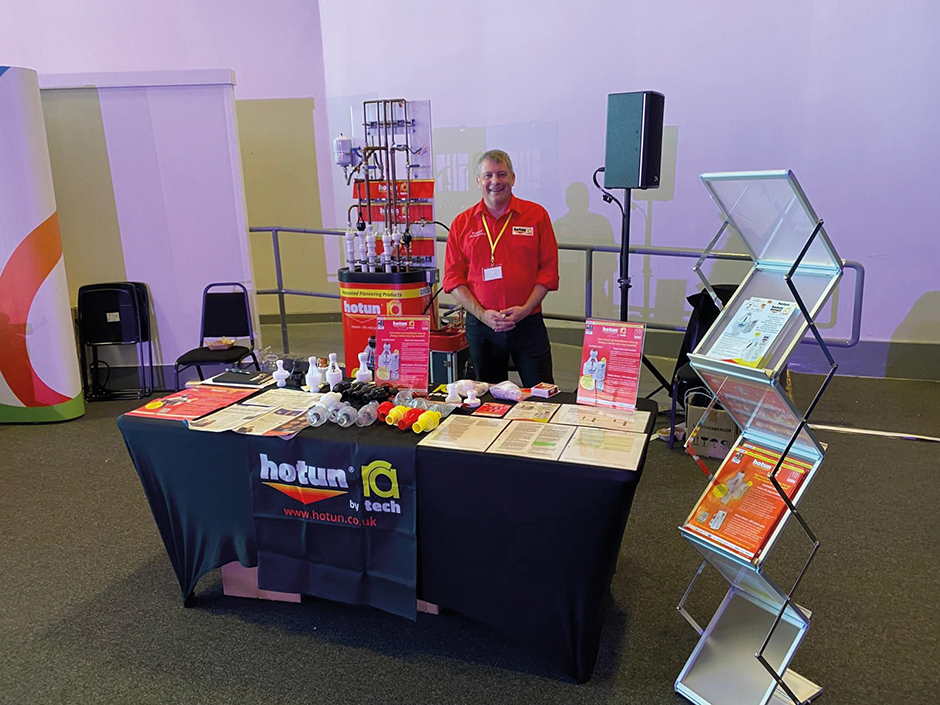
Russell Armstrong joined the plumbing and heating industry straight after leaving school, working for a company specialising in ductwork and steel fabrication. His three-year apprenticeship gave him a good grounding in the practicalities of design and manufacture. He went on to become a design engineer before moving into sales and then setting up his own business installing kitchens and bathrooms.
In 2014, Armstrong set up RA Tech UK with his wife, Ally, and developed the hotun range of dry tap tundishes and hotun detect, which has been designed to alert homeowners or building managers when water passes through the tundish (hotun.co.uk).
How did you come up with the idea for your product?
I came across a project where I needed a product and there wasn’t one on the market. I could solve the problem with two separate products, but they were expensive and didn’t fit because they were too big.
Having scoured the market for about six months, and realising this product wasn’t available, I thought, I’ve got the drafting skills, I’ve got the design skills, let me see if I can design something that might work. So that’s what I did.
If I’d known the enormity of what I was about to embark on at the outset, I probably would have been too scared to move forward.
How did you prove that your concept worked?
That’s where the wonderful invention of 3D printing helped. Someone in my family makes 3D model trains, so I asked him to make a 3D render, fitted it at home, ran some water through it and it worked.
The question then was, could I bring that product to market at a price I thought somebody like me would pay? Did I have a marketable product that could earn me a living?
What was the hardest part of the process?
I’ve tackled this question quite a lot over the last ten years and it seems to me that every hurdle that I faced was a challenge in its own right. A challenge that, if I hadn’t been able to get over it, would have caused everything to collapse.
So, I know it’s a bit trite to say that every hurdle was the most difficult hurdle, but there wasn’t just one thing that was difficult to get over, it was everything.
Do you have any advice for an installer who has an idea about a new product, but doesn’t quite know where to start?
You need to have conviction in what you’re doing. I’ve seen a lot of people who might call themselves inventors, who, once they’ve designed a product, can’t be bothered to see it through, or want to go and do the next big thing and let that idea drift away.
It’s about having that determination to actually follow through the process. You have to have single-bloody-mindedness and think ‘I’m going to make this work’. Otherwise, you would let other people stop you from doing it.
Somebody once said to me, ‘what happens if somebody steals your idea?’. Well, if they steal my idea, it’s because they think my idea is good, otherwise, they wouldn’t want to steal it. If I let that fear stop me going forward, I’ve got nothing anyway. You can’t let the fear of something negative happening stop you from making that first, second or third step.
Is there anything that the industry could be doing to make the process easier?
When Paul Harmer, technical project consultant at the CIPHE, saw my product he knew that it would work and he could see that it had a place in the market. As an inventor, he knew the right words to encourage rather than dissuade. I was already a member of the CIPHE, so just having someone like him to talk to helped my confidence. I felt I had allies in the industry.
Organisations like the CIPHE can nurture design and talent by saying, as an institution, ‘we will help and support you’. The individual has to have the money, the drive and sufficient knowledge to be able to power it themselves, but the institution could say, ‘if the product works we will champion that product’.
It needs someone to have a non-partisan attitude towards new ideas to perhaps say, we’ll help protect you, we’ll give you support.
In hindsight, is there anything that you would have done differently?
I would have a different approach to how I brought the product to market. When I started, I had one product and within 18 months I had a whole slew of different products that other people wanted.
If I had the time again, I would streamline that. But that’s not how these iterative processes develop. Because you start with no knowledge. So, once you’ve gathered knowledge that improves your decision-making process, you’ve already made the decisions. There was never a time that I thought, yeah, I should have done it differently, but I didn’t have the right knowledge then to make different decisions.
What’s next?
I want to make sure the UK market is serviced to its full potential and then look at taking a presence in international territories. The biggest challenge is investing the money to develop those markets. Different territories have different attitudes to a problem, and different regulations that might not work as well. Our underlying objective will always be to provide innovative solutions that make a real difference to professionals and the service they provide to their customers.
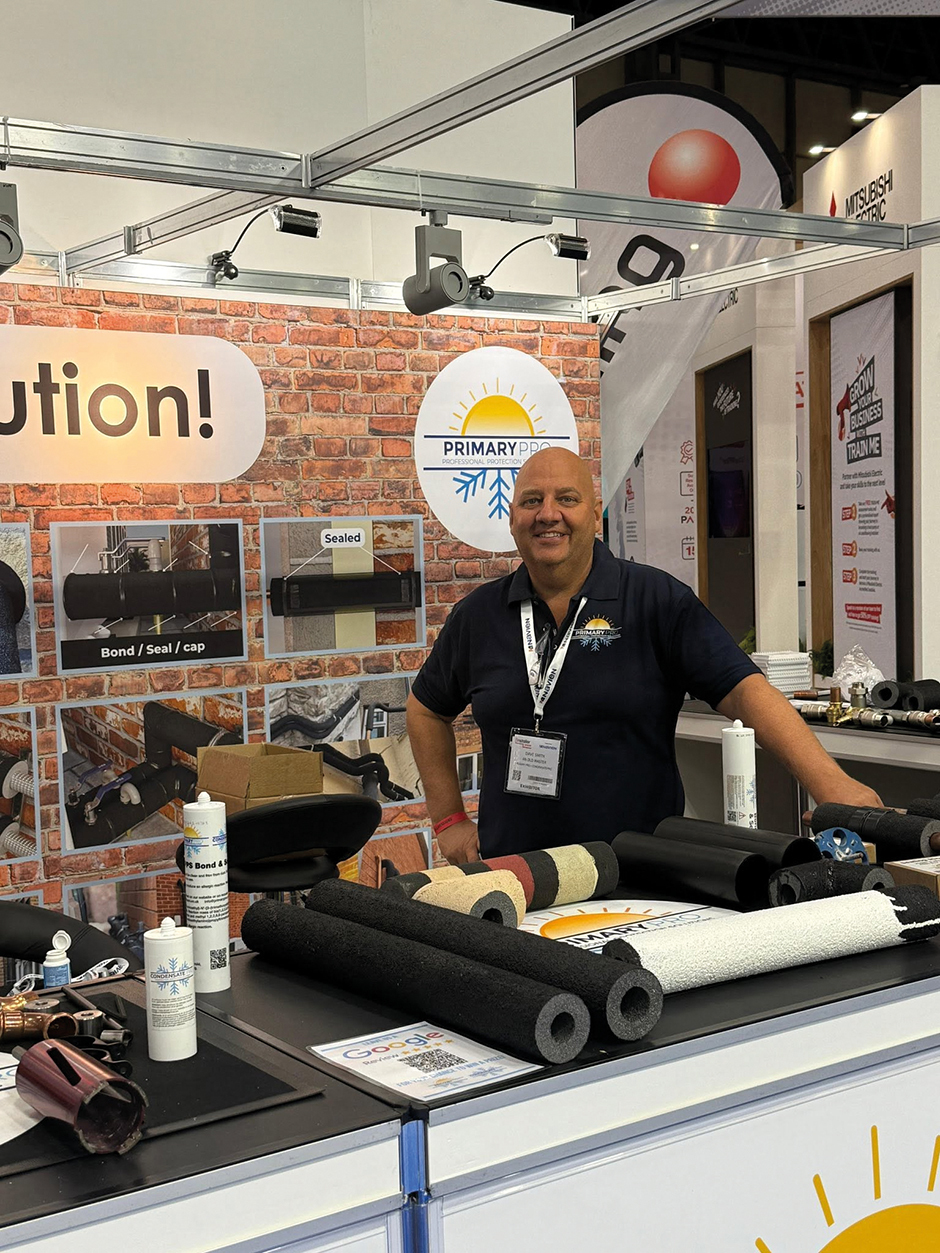
Dave Smith has worked in the plumbing and heating industry since the age of 15, putting himself through college before working for another company and then setting up on his own.
In 2017, after 30 years running his own business, he sold up with plans to retire, but quickly got itchy feet and decided to move into manufacturing.
He set up Smartovations in 2019, developing Condensate Pro to protect condensate pipes in freezing conditions and Primary Pro (primarypro.co.uk) to protect external pipework for air source heat pumps.
Smith sold Smartovations to an EOT (Employee Ownership Trust) in March 2025, but continues to support the business as an independent consultant.
How did you come up with the idea for your product?
You have to look at everything you can do to help the installer because you’re not making products, you’re making solutions.
I found a niche – a problem with external insulation – and I worked on a solution for about two or three years, and then spent two years testing and checking everything.
Over the years, we’ve made different products and tools to solve installers’ problems. There are 47 products in the Primary Pro and Condensate Pro range and they’re all there to help an installer when time and the weather is not on their side.
What stages do you have to go through in the development process?
The first is concept. You look at the problem, then find a solution. With insulation, first of all you’ve got to look at great thermal conductivity, then UV weather protection, absorbing water, and then different things like joining it together. You develop those and test them until you’re happy with them, and then you launch.
What’s the hardest part of the process?
It’s very easy to have an idea and a concept, but it’s really, really hard to get it to market. That’s the hardest part of the whole process: getting it visible and seen by installers.
And R&D – you always think you’ve got everything right. You know, I’ve spent a really long time testing under all the different conditions. We’re still doing live testing now with all the products, we always do, so we can say they’ll last with the warranty and with the maintenance.”
Do you have any advice for an installer who has an idea about a new product, but doesn’t quite know where to start?
First of all, you’ve got to put it out there to people who you trust. You might have an idea but does it solve the problem? Is it a solution? Does it make life easier? And once you’ve established that, is it going to make it easier for a manufacturer or the installer – because you might have something you can sell to somebody else.
Don’t rush anything. Even if you think it’s right, make sure you do your checks and take your time with it. It’s really important to get the fundamentals right.
Make sure you’ve got everything right before you launch and do plenty of marketing. Try to aim it at the customer, which in my case is the installer. YouTube videos and things like that are really important, because it shows the installer that you know what you’re doing and also helps them understand what you’re doing.
Make sure you’re asking the questions in your head that your customers might ask, and answer those questions honestly. If three different customers ask you the same question you’ve failed; you need to answer that question before it’s been asked.
Is there anything the industry could be doing to make the process easier?
Merchants only want to sell what sells, but it’s chicken and egg. If you don’t get it out there, installers can’t see it; if they don’t see it, they don’t buy it.
Years ago, the merchants had the skills and the knowledge to help you out. That’s gone a little bit. For me, it would be really key if the merchants were willing to understand new products and not just say that they only sell the products that sell. They could try to help people who have good ideas and good concepts.
And are there any issues in the industry at the moment that you think need addressing?
Regulations and standards can be frustrating. Those setting them need to be the people who know and do the job. It’s very easy to set regulations when you don’t actually fit the products. When you look at a lot of the standards, you think, ‘well, that’s not practical and it’s also, really, really hard to do’. We need a common-sense approach to everything.
What’s next?
I’m semi-retired, but I’m helping people come up with some other products. I’ve helped another company make a better trunking system for external pipework, and there’s a couple of other things I’m working on.
CIPHE says:
There's real scope to build a long-term career beyond day-to-day plumbing and heating installation. A plumbing and heating background can open doors far beyond installation - into design, manufacturing, technical consultancy, training, management and entrepreneurship.
The CIPHE's career pathways guide sets out how you can advance in the trade, with clear routes for developing your skills and moving into new roles. For more information, visit https://www.ciphe.org.uk/professional/careers--trainees/career-pathways/
You might also like

Interview: CIPHE National President Paul Daley

Toilets: a guide for plumbers