World Plumbing Conference 2026 report
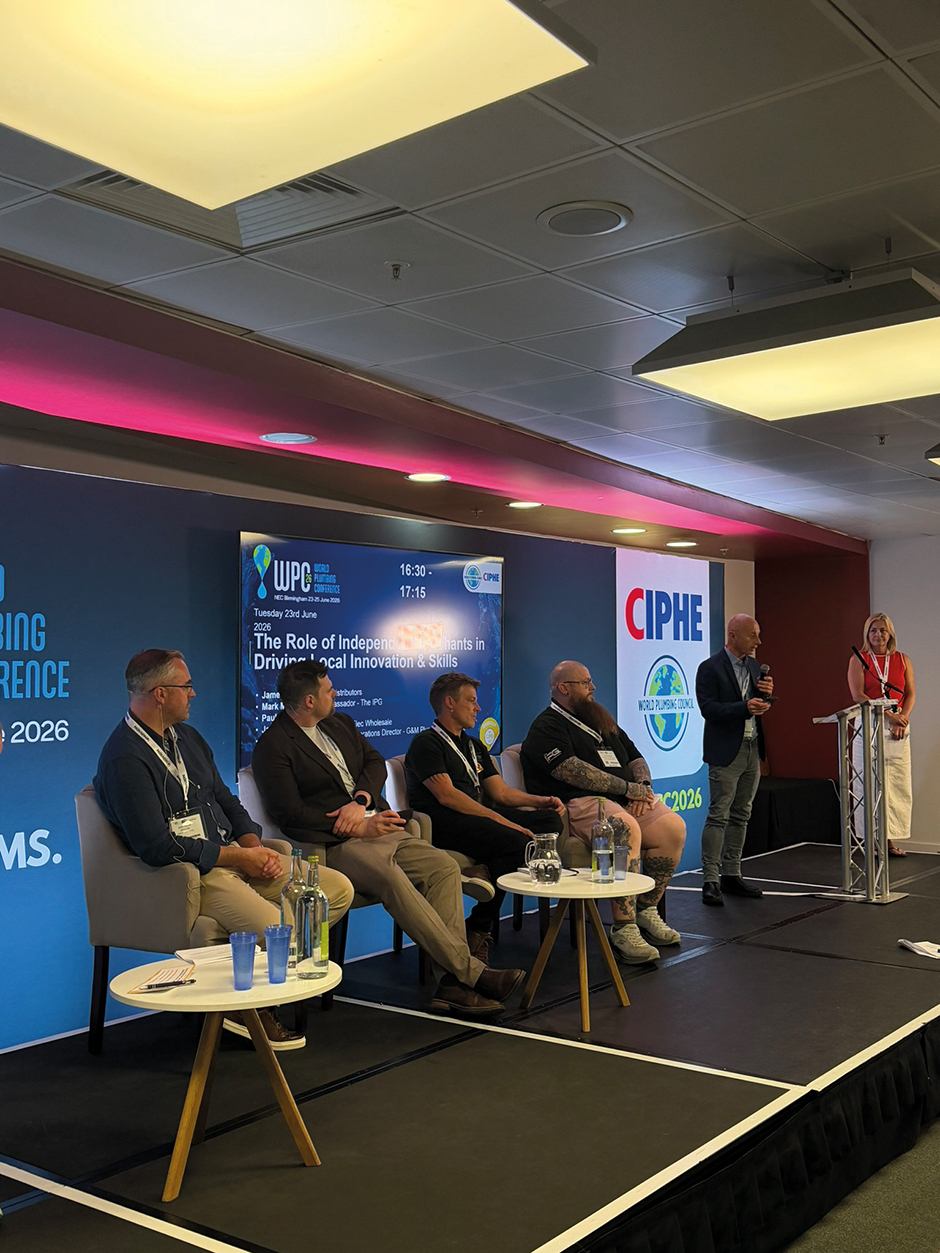
Before the World Plumbing Conference (WPC) 2026 opened its doors, expectations extended far beyond delivering a successful three-day event at the NEC. Bringing together plumbing professionals from across the world was an achievement in itself, but the real ambition was to create a lasting legacy that would continue to shape policy, training and professional standards long into the future.
Reflecting on the event, Kevin Wellman, CEO of the Chartered Institute of Plumbing and Heating Engineering (CIPHE), believes those ambitions are already becoming a reality. “The conference was a great success, and I was delighted that, at the close, we were able to announce a number of legacy outcomes,” he says. “These included ensuring that equipment from the Skills Forum, linked to WorldSkills, will be donated to good causes thanks to the immense generosity of sponsors.”
Wellman says that Technical Strategy Groups will also be created, with the first focusing on backflow prevention. “In addition, it was agreed that an International Women in Plumbing Group will be established, and that the World Plumbing Council will actively promote the need for licensing and mandatory training for plumbing globally,” he says.
“For me, those announcements showed that WPC 2026 was not simply a three-day conference. It created momentum, practical action and a platform for long-term change across the international plumbing community.”
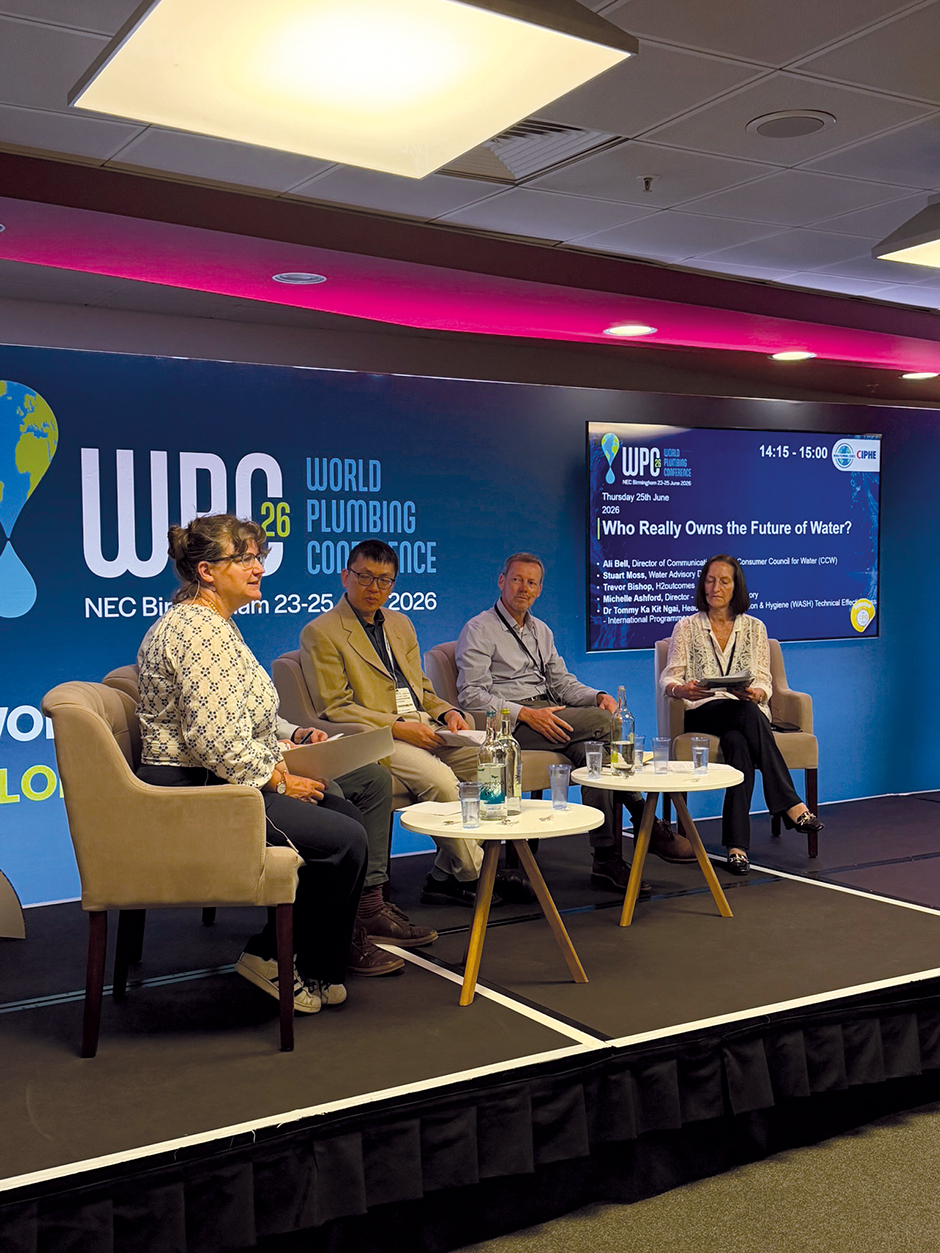
Conference themes
Those legacy commitments reflected the conversations taking place throughout the conference. Across more than 60 presentations and panel discussions, delegates explored everything from artificial intelligence and digitalisation to water scarcity, healthcare water safety, product compliance, sustainability and the future workforce. While the topics were wide-ranging, they consistently returned to one central message: plumbing is fundamental to public health, resilience and the communities it serves.
Among Wellman’s personal highlights was a keynote from futurist Matthew Griffin, who challenged delegates to rethink one of the world’s biggest environmental issues.
Rather than focusing solely on the growing pressures of water scarcity, Griffin explored emerging technologies including cellular agriculture, vertical farming and waterless AI data centres, asking how innovation could help solve the problem for future generations.
Elsewhere in the programme, discussions brought focus back to public health, demonstrating how plumbing design and water management play a critical role in protecting patients within healthcare environments. “There were over 60 speakers and panellists whose presentations were of the highest calibre,” says Wellman. “The presentation by Griffin was fascinating. He was invited to present the Worshipful Company of Plumbers’ Annual Lecture – the first time it had taken place outside London. Susanne Surman-Lee gave an inspiring presentation on Engineering Out Infection: Plumbing for Patient Safety in the Age of Antimicrobial Resistance. I described Susanne’s presentation as simply amazing!”
The conference also made clear that tackling these challenges will require collaboration with groups outside the profession. Speaking during the event, former UK Energy and Clean Growth Minister Claire O’Neill emphasised the importance of bringing together industry, government and regulators to address what she described as a global challenge.
She said: “We’re looking at what is happening in the world of water, the challenges that are coming up, the solutions that are out there, and how we can work together across different parts of the profession, how we can work with government, how we can work with regulators to really come up with some solutions to deal with what is now a global challenge.”
The licensing debate
For Wellman, however, one issue dominated discussions throughout the conference: licensing. Before WPC 2026, he told P&H Engineering that introducing a licence to practise was one of the most important debates facing the UK plumbing industry. Hearing perspectives from attendees representing 25 countries only reinforced that conviction.
“Delegates worldwide were surprised that the UK does not have licensing (with the exception of Gas Safe) or mandated training,” Wellman explains. “Some countries, such as the US, impose a levy on all plumbing contractors, which is used for training apprentices. Other countries receive grants of millions of pounds to build state-of-the-art training centres.”
The discussion extended well beyond comparing different national approaches. It also explored how licensing systems could evolve internationally and what best practice might look like in the future. Dave Viola, CEO of IAPMO Group and chair of the World Plumbing Council, described the session as an opportunity to examine both the benefits of licensing and how it could be strengthened globally.
“It was very enlightening to learn that there are areas of the world that do not have licensing in place,” he said. “We had a very constructive discussion on the pros and cons of licensing and how to modernise to keep one in place, and also to bring it to places that don’t have it.”
Wellman tells us that, following the panel discussion, the World Plumbing Council agreed to continue those conversations with a view to issuing best practice guidance for countries looking to introduce or strengthen licensing frameworks.
That international perspective was echoed by delegates from across the globe. Writing on LinkedIn, Shayne La Combre, CEO at Plumbing Industry Climate Action Centre, Australia, said: “While it is not without its challenges, it is viewed as an aspirational model by many parts of the world.
“We should never take for granted the protections it provides, nor how fragile those protections can become if our industry does not do everything possible to ensure the system operates as intended.
“Most people are shielded by the benefits of licensing without ever realising it’s there. But after hearing some of the horror stories shared at yesterday’s conference, I am grateful for the safeguards we have in place.”
The debate also resonated with practising installers attending the event. Ollie Salmon, of Salmon Plumbing and Heating, said: “It’s my first time coming to InstallerSHOW and WPC 2026 and it’s fantastic: going round the different stands, speaking to people and picking their brains, and seeing new technologies. I also caught a talk about whether there should be a licence to plumb, which I agree with, so it’s very interesting.”
Bringing the industry together
Hosting World Plumbing Conference 2026 alongside InstallerSHOW proved to be one of the event’s greatest strengths. Rather than separating technical debate from practical application, delegates were able to move seamlessly between conference sessions, live demonstrations, product launches and the Skills Forum.
“Without doubt, hosting WPC 2026 alongside InstallerSHOW helped us achieve what we set out to do some three years ago,” said Wellman. “The two events complemented each other extremely well, as did the Skills Forum. It gave the conference a much broader reach and helped connect the international policy and technical discussions at WPC 2026 with the practical innovation, products and skills development being showcased at InstallerSHOW.
“Having delegates from 25 countries, alongside participants from 17 countries in the Skills Forum, created a real sense of global collaboration. It meant people were not only talking about the future of plumbing, training, licensing and sustainability, but also seeing those themes brought to life through demonstrations, industry engagement and skills activity.”
That blend of policy, innovation and practical skills was something visitors also valued. “Even though I’ve been in the industry a while, it’s nice to go and pick the brains of the suppliers you’ve been installing for,” said Paul Reed, of Toucan Heating and Plumbing. “It is good to see if there are any new innovations coming out – there is so much out there now, such as air source heat pumps. You can meet people like Vaillant and Viessmann offering ASHPs rather than boilers. The conference is a good addition, and there are probably more people here than if it was a standalone event.”
Skills in action
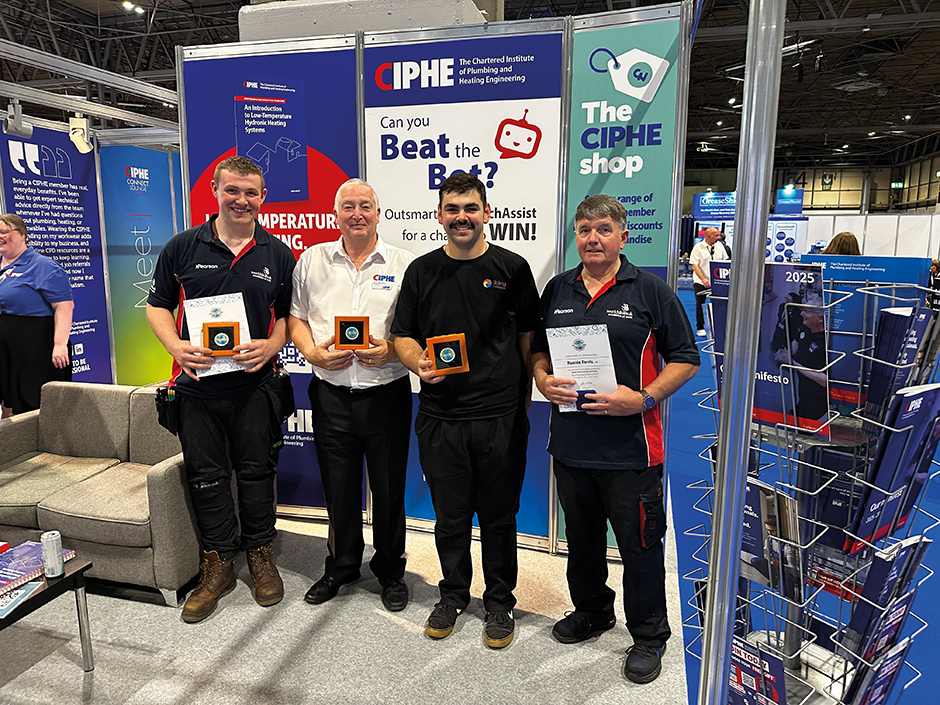
While the conference programme explored the future of the profession, the Skills Forum showed what that future already looks like in practice. Just beyond the conference halls, visitors gathered throughout the three-day event to watch WorldSkills competitors complete complex plumbing installations under pressure, demonstrating the technical precision, problem-solving and craftsmanship required of today’s plumbing professionals.
Looking back on the event, Jerry Whiteley, technical manager at the CIPHE, believes the showcase achieved exactly what it set out to do. “InstallerSHOW demonstrates new products each year along with the technical experts there to explain and guide potential installers. The vast range all under one roof makes this simple to achieve over a few days,” he said. “The WorldSkills showcase was very well received by all. Each day the area was packed with an audience in total admiration of the skills being shown. In fact, I overheard many say they didn’t have the same level of skills!”
The reaction from visitors reflected one of the showcase’s biggest successes. More than simply displaying technical excellence, it challenged perceptions of modern plumbing, demonstrating that the profession increasingly demands precision, adaptability and continuous learning as new technologies reshape the industry.
That message was echoed during a panel discussion on the global workforce. Reflecting on the challenges facing the profession, Parisa Shirazi, of WorldSkills UK, highlighted the importance of forging stronger links between employers and education providers, saying one of the most important conversations was: “how do you connect industry with education more meaningfully.”
For Whiteley, it wasn’t only the technical ability of the competitors that stood out. Just as memorable was the professionalism and mutual respect they demonstrated throughout. “The competitors’ camaraderie shone through each day as did their dedication to the highest professional skills,” he says. “The floor was jammed on the final day and during the awards of achievement. The crowd had such pride and respect for them.”
Those moments underlined one of the conference’s wider themes: investing in skills means investing in the future of the profession. Whiteley believes many visitors left with a renewed appreciation of what the next generation is capable of achieving. “Visitors said that they admired the skills being demonstrated – some wished they had an apprentice of this calibre,” he says. “Events like this inspire and represent the very best. This was achieved and will be a goal for those wishing to do the same. The long-term legacy is for the materials to be used on good causes here in the UK, and to offer work experience and mentoring for anyone seeking to learn about our great industry.”
Positive outcomes The World Plumbing Conference 2026 may now be over, but many of its most significant outcomes are only just beginning, and its success will ultimately be measured by what happens next. New international Technical Strategy Groups are being established, the World Plumbing Council has committed to advancing discussions around licensing and mandatory training, materials from the Skills Forum will support good causes across the UK, and new mentoring and work experience opportunities will help inspire future professionals.
Report by Anna-Marie DeSouza
You might also like

Plumbing and heating careers off the tools
Interview: CIPHE National President Paul Daley