Servicing and maintaining heat pumps
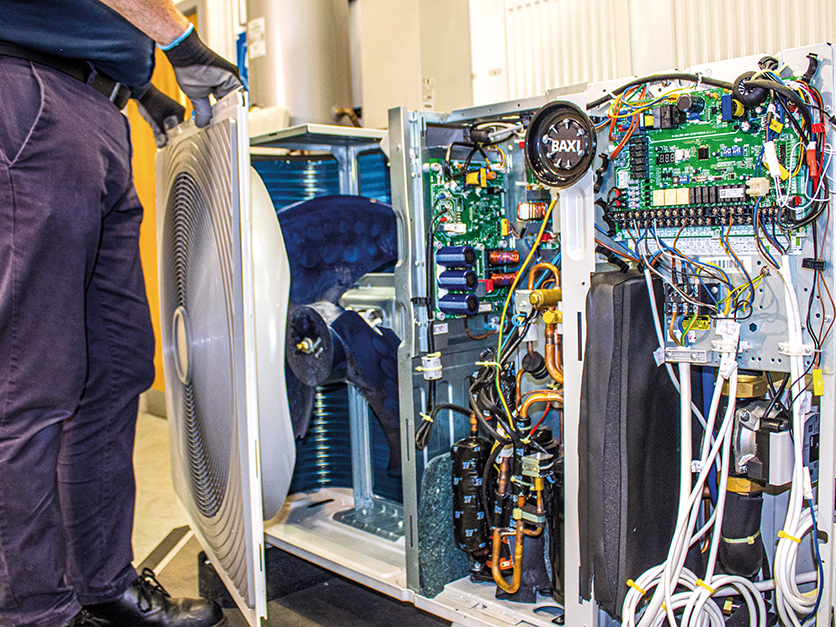
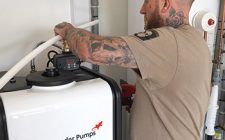
Any appliance benefits from regular and thorough maintenance to promote longevity. So, when it comes to heat pumps, a maintenance programme that focuses on the heating system and its components will increase system efficiency, resulting in lower annual running costs and enabling engineers to spot potential issues before they become major problems.
Clear communication
An ability to pre-empt problems and deal with them proactively is a far more cost-effective, and far less disruptive approach, than if components were left to fail and dealt with reactively. Therefore, a clear discussion with customers around the tasks carried out during a service and the reasons behind them will help them understand the importance of servicing.
It’s also important for installers to talk to customers about the things that they can do to help the performance of their systems, such as making sure that the evaporator remains clear of debris, like leaves, for example, and the outlet of the fan is not blocked. We have even seen cases where customers have put sheds around outdoor units. Any kind of barrier set too close to the front of the unit could cause the cold air expelled from the heat pump to recirculate, lowering performance and, in the worst case, freezing the unit.
Installers shouldn’t undervalue their knowledge. A checklist of these tasks, provided by the manufacturer or the Heat Pump Association, not only helps guide these discussions, but is also a good thing to leave with the customer to show the value of the service.
The big issues
The main issues encountered with heat pumps include when end users inherit a heat pump system and don’t understand how to correctly run the appliance, expecting it to operate exactly like a gas boiler. However, with heat pump heating and hot water systems, the temperatures reach a maximum of 55°C, so complaints about radiators not being hot enough are common because end users are not used to low-temperature heating.
Other issues can result from appliances not being commissioned correctly. Good design is key for good performance, but so is good commissioning; combining both will ensure that the heat pump runs at the lowest possible temperature, lowering the stress on the compressor, keeping efficiency high. When one or both of these things are missed, the customer is left with poor heating performance and higher bills. It is important that a new heat pump installation is thought of as a system, not just a standalone unit. If this is done well, the heat pump – properly maintained and used correctly – should deliver great comfort and performance for many years.
If not maintained correctly, much in the same way that a gas boiler or car would respond to a lack of maintenance, heat pumps are likely to decrease in system performance levels, resulting in an increase in electricity bills.
Generally, a lack of servicing results in debris blocking the evaporator, causing poor airflow. This will stop the refrigerant from being able to collect enough energy and could lead to poor performance, filters blocking, poor water flow, and can cause an increase in compressor stop/starts. This will drive up costs and could lead to premature failure of the unit, corrosion on the unit itself or in the system, which may not be spotted. If this problem isn’t picked up, it could potentially lead to physical damage and as glycol levels could deteriorate, risking freezing and damaging the heat pump. In all these cases, a lack of regular maintenance is likely to impact negatively on efficiency. In worst-case scenarios, the heat output of the unit could drop which would result in cold homes and an eventual breakdown of components within the appliance or system. Breakdown callouts are far more costly for the end user than a regular service regime for the heat pump system.
Best practice
It is generally advised to service heat pumps annually, just like a gas boiler. In some locations, such as near the coast, it may be best to increase the servicing frequency, given the corrosive impact of salt in the air on sensitive components.
Services should include:
- checking the unit and pipework for corrosion/deterioration
- cleaning the evaporator
- checking filters
- running through the performance of the unit.
It’s important to bear in mind that heat pumps are part of a system, so it would be prudent for a service engineer to review and check the complete system, including the controller and any other components that are part of the configuration.
While there are some servicing requirements that remain the same across all heat pumps, different types of heat pumps – such as a Monoblock or a split, ground or air source system – will require different checks and servicing regimes. If the refrigerant requires checking or replenishing, the engineer carrying out the task needs to be F-Gas registered. Does the system have glycol? If so, this also needs checking to prevent the risk of freezing.
Aside from the normal checks, each heat pump will require a different set-up. This is mainly carried out via the controller. Often, manufacturers offer training to enable engineers to achieve the most efficient set-up for their customers. Remember, the system should have been designed to achieve the best performance, so following manufacturers’ advice and training not only maintains warranties, but will ensure correct operation for many years.
The Heat Pump Association (HPA) has launched new air, ground and water to water heat pump annual service checklists. These checklists outline the recommended minimum annual service checks for heat pump systems, providing valuable guidance for those working in the sector.
To access the checklist, visit: heatpumps.org.uk/resources/technical-resources
You might also like
The role of heat interface units (HIUs) in modern heat networks
How to install press-fit pipework for ACR systems