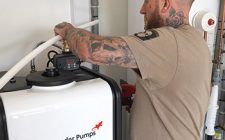
Using heat equipment safely

The use of heat equipment to make a joint for pipes is as old as plumbing itself and the risks when using it remain the same. Using heat equipment carries the risk of starting a fire, which in turn can burn down a building, seriously injure people or, in a worst-case scenario, be fatal.
Risk assessment
Each time heat equipment is used in different locations and for different purposes, the risk changes. Therefore, risk assessing is vital as being complacent might lead to disaster.
If we look at the training criteria used today, you will find that it is pretty much the same as it has always been. Anyone studying a course today will be assessed in the assembly and safe use of an LPG bottle. However, while there is still the use of Oxy Acetylene for silver soldering or lead welding on-site, in most cases this is no longer applicable in training in colleges.
What happens in training?
In the current apprenticeship qualification, the four questions in the Health and Safety exam make up 20% of the final mark, based on one of the following seven criteria:
- Identify various types of gases used in pipe and sheet jointing processes.
- Describe how bottled gases and equipment should be safely transported and stored.
- Identify various types of heat-producing equipment and how to check them for safety.
- Describe how gas heating equipment is safely assembled and used.
- Identify the three elements of the fire triangle and how combustion takes place.
- Identify the dangers of working with heat-producing equipment and how to prevent fires occurring.
- Describe the method for fighting small fires that can occur in the workplace.
In practice, this knowledge is only a starting point. Of course, application in the workplace is where it really counts as not everyone in the industry has gone through a training centre. Is this why today we still read about disastrous occurrences with the plumbing and heating engineer being brought down as incompetent?
What else should we be doing?
- Identify another method whereby you do not use heat equipment – there are many.
- Pre-fabricate where you can away from danger.
- Remove any combustible material nearby.
- Check for other types of flammables such as low-lying vapours from another source.
- Have someone on fire watch, during and afterwards. Embers might take hold in an area not necessarily in your sight.
- Make sure you have a fire extinguisher next to you. Fire extinguishers are for small fires, so it is no good sitting in the van because by the time you run outside to get it, the fire might be too big. Check with your insurer which type they recommend you should have; it is generally dry powder. It is not about scaring the customer; it is about showing you care.
- Make sure your insurance is in place and covers you for the work location and type of work. Not all insurance policies cover every situation.
- Roof voids or under floor locations are usually dry and very high risk.
- Remove old pipe insulation and dust.
- Supervise and instruct trainees and colleagues as they will see things differently to you.
- Check and check again.
There are, of course, many alternative pipe jointing methods available that don’t require heat equipment. Sometimes they may be more expensive, but they may also be more appropriate when considering ways of de-risking your work.
You might also like
The role of heat interface units (HIUs) in modern heat networks
How to install press-fit pipework for ACR systems